Holy Moly!
A handful of reactors supply the isotope that hospitals use to make technetium for scans.
The idea for today’s blog came from my favourite podcast of all time, No Such Thing As A Fish, which I listen to regularly and which is full of people nerdy enough to have made nearly 700 episodes by now. In episode 662, they were talking about molybdenum, element 42, which people in the industry call “moly” and which mostly ends up in steel. I had heard of it, but I never appreciated how special it is for modern medicine until I found out that one radioactive form of it, molybdenum-99, is behind a huge share of the medical scans done around the world. So I wanted to know why, where it comes from, and what happens to the countries that cannot make it.
Moly is already in you
Ordinary molybdenum is already inside almost all of us. It is an essential trace element that works as a catalyst in four of our enzymes, which, among other things, break down the sulfur in the protein we eat and help clear drugs and toxins out of the body. The podcast also mentioned that it helps with reproduction, and while I could not find any evidence of that in humans, it does hold for plants, which flower poorly and produce light, weak seeds when they do not get enough of it.
Why moly matters in medicine
For scans, doctors use the decay product of molybdenum-99, technetium-99m, the most used medical isotope in the world.
Technetium-99m is almost perfect for imaging. It gives off gamma rays at an energy a special camera can easily pick up, with very little other radiation, so the patient gets only a small dose, and it is out of the body within about a day. Doctors attach it to different molecules depending on what they want to look at, inject it and watch where it travels, which tells them whether blood is reaching the heart muscle, whether a cancer has spread to the bones, or how well the kidneys and thyroid are working.
The OECD’s Nuclear Energy Agency counts more than 40 million medical procedures a year that rely on molybdenum-99. If you have ever had a bone scan or a heart scan, there is a good chance technetium was involved and nobody mentioned it.
Milking the moly cow
Half of any batch of technetium-99m is gone in about 6 hours, and even molybdenum-99 loses half of itself every 66 hours or so, which means nobody can make a big batch and keep it for later.
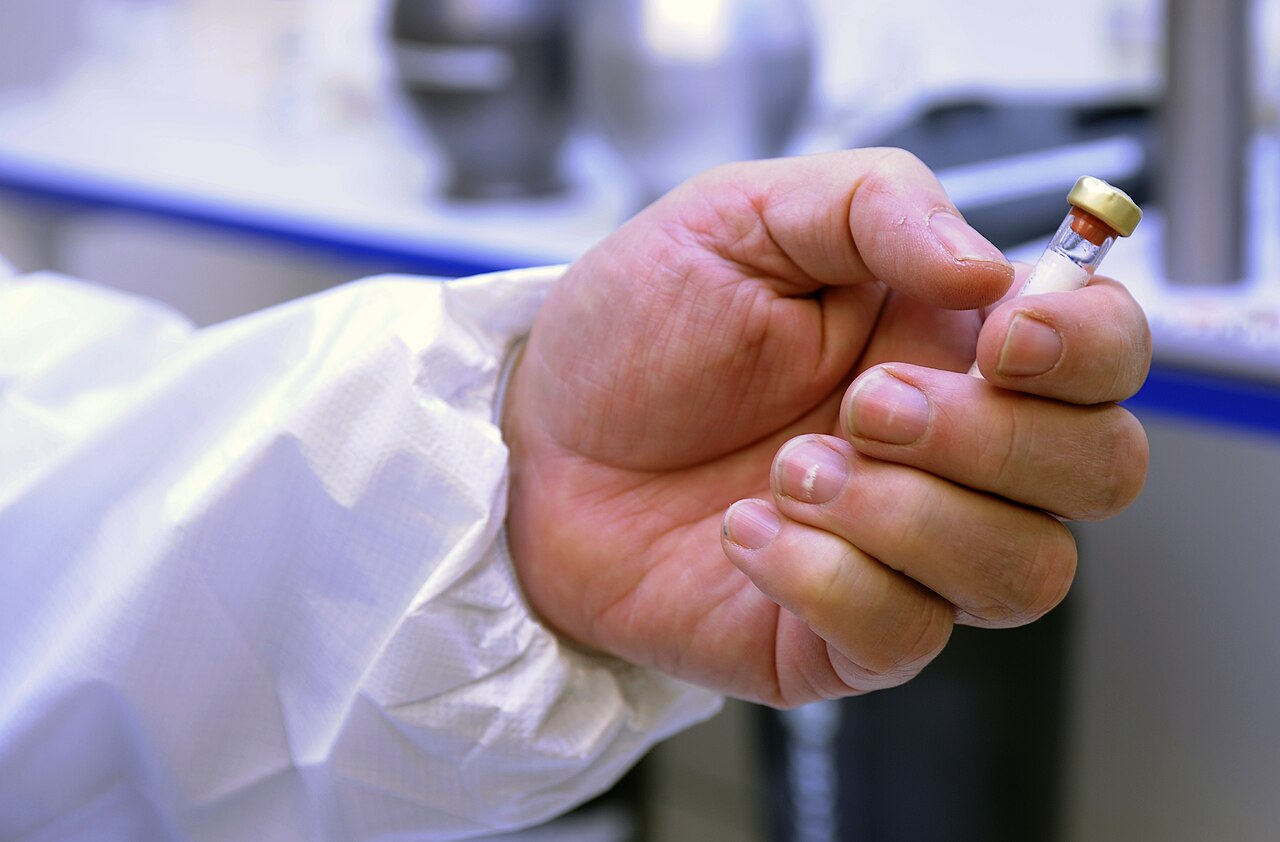
Hospitals order the molybdenum-99 in a small, heavily shielded container called a generator, where it sits on a column and keeps turning into technetium. Every morning a technician runs salt water through the column, which washes out the fresh technetium and leaves the molybdenum behind to make more. People in nuclear medicine call the generator a “moly cow” and this daily wash “milking”, and after about a week, when the cow runs dry, the hospital needs a new one.

Which reactors make molybdenum-99
Molybdenum-99 is made by splitting uranium inside a nuclear research reactor. Small uranium targets spend several days in the reactor before a specialised plant dissolves them, pulls out the molybdenum and packs it into generators, which are then rushed to hospitals while the molybdenum is decaying the whole way. To do this, a country needs a suitable reactor, a processing plant and a fast route to its hospitals, and very few countries have all three.
Just six reactors make about 95% of the world’s supply.
| Reactor | Country | Started running |
|---|---|---|
| LVR-15 | Czechia | 1957 |
| BR2 | Belgium | 1961 |
| HFR | Netherlands | 1961 |
| SAFARI-1 | South Africa | 1965 |
| MARIA | Poland | 1974 |
| OPAL | Australia | 2006 |
All of these except OPAL started running before 1975, and none of them were built with medicine in mind. They are research reactors that picked up isotope production along the way. Over the last two decades they have also been switching from highly enriched uranium, which could in principle be used to make a weapon, to low-enriched uranium, which cannot. That makes the world safer, but it also means each run gives less molybdenum and costs more.
When the reactors stop
With so few reactors, a single breakdown is felt all over the world. In 2009 and 2010, Canada’s NRU reactor and the Netherlands’ HFR, which together made about two-thirds of the world’s supply, were both shut for repairs at the same time, and hospitals in more than 80 countries had to cancel scans or switch to costlier, less effective tests. Canada’s reactor came back in 2010 but was retired for good in 2018.
It has kept happening since. In late 2022, outages at several European reactors brought European processing almost to a halt, and in October 2024 a structural problem suddenly shut the HFR down again while other reactors were in maintenance, leaving hospitals short once more.
How everyone else manages
Most countries make no molybdenum-99 at all and import it, which means the whole system runs just in time. Every week, generators are made in a handful of places and flown out, racing against their own decay, so a reactor fault, a cancelled flight or a slow customs check can all mean fewer scans somewhere.
The United States uses roughly half of the world’s molybdenum-99 but has not made any at scale since the late 1980s, and imports it from Europe, South Africa and Australia. Japan, another big user, is aiming to make part of its own supply by 2028. According to the OECD, it is low- and middle-income countries that suffer the most, because they sit at the end of the longest supply lines with the least room to absorb a shortage.
People are working on ways around the reactors. Since 2020, the TRIUMF laboratory in Canada has had approval to make technetium-99m directly in a cyclotron, a type of particle accelerator, skipping both molybdenum and reactors. In the United States, a company called SHINE is building an accelerator-based plant planned for 2027, and new reactors are on the way too, including PALLAS in the Netherlands in the early 2030s, the Jules Horowitz Reactor in France, and RA-10 in Argentina, which could give South America its own supply for the first time.