The Search for a Mind to Control
For twenty years, the CIA paid hospitals and universities to drug, shock and erase people in the hope of learning how to control a human mind. It never worked.
This summer, while I was living close to my best friend, the two of us kept each other going with books, buying them together and pushing each other to actually finish them. I still can’t decide whether to thank him with my whole heart or hold a grudge for getting me to read Tuesdays with Morrie, which made me cry far more than I was prepared for. What I did notice was how much I relied on that push. Left to myself, I would pick up a book, decide I was too busy with work, and put it down again. But this blog is about making time for your nerdy side anyway, so I am very proud to say that I just finished Holly Jackson’s mystery thriller Not Quite Dead Yet completely on my own. In its honour, today’s piece is about something mysterious and thrilling, except this time it is real and actually scary. Where better to find a real-life mystery than in the redacted files of one of the most powerful governments in the world? Let’s talk about MKUltra, the US government’s secret attempt to learn how to control the human mind.
Why the CIA wanted to control minds
In 1950, communist North Korea invaded South Korea, and the United States, deep into the Cold War and determined to stop communism spreading, led a United Nations force to push it back. China joined on the North Korean side, and thousands of American soldiers became prisoners of war. A few of them later read out confessions on Chinese radio saying the US had used germ warfare, and a small number refused to come home when the war ended. Americans called it brainwashing and became convinced the communists had a secret technique to wipe out a person’s beliefs and replace them with new ones. If they could control minds, the CIA wanted to as well.
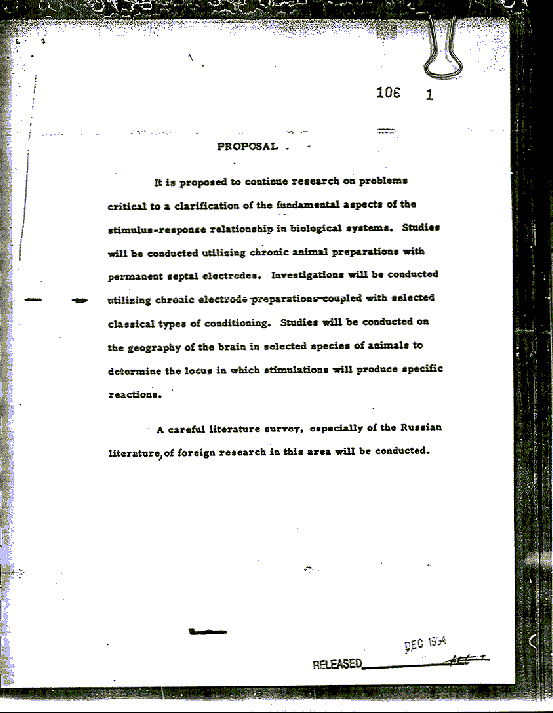
So in April 1953, CIA director Allen Dulles approved MKUltra. The name was a code, not a description. “MK” was the prefix the CIA used for projects run by its scientific and technical division, and “Ultra” may have been a nod to the Second World War, when Ultra was the British code word for intelligence from broken Enigma messages. Over the next twenty years it quietly funded more than 150 projects at more than 80 universities, hospitals, prisons and pharmaceutical companies across the United States and Canada, at an estimated cost of $10 million or more. The experiments used LSD, sensory deprivation, hypnosis and electric shock treatment, often on people who never agreed to it and had no idea what was happening to them.
The safehouses
This somehow gets worse. In an operation called Midnight Climax, the CIA set up safehouses in San Francisco that worked like brothels. Sex workers paid by the agency lured men there, where they were secretly given LSD and filmed through one-way mirrors, chosen because they would be too embarrassed to tell anyone. Even government employees were not safe. In 1953, an army scientist named Frank Olson was secretly dosed at a CIA retreat and fell to his death from a New York hotel window about a week later.
MKUltra even has a strange link to the hippie movement. Alongside the secret dosing, the CIA funded LSD studies that paid volunteers to take the drug, and one of those volunteers was a Stanford student named Ken Kesey. A few years later, Kesey and his friends started throwing huge LSD parties in California, with live music and light shows, that they called the Acid Tests. The name was theirs, not the CIA’s, but the parties helped spread LSD into the counterculture of the 1960s. The CIA did not create the hippie movement, but a drug it hoped to use for mind control ended up becoming one of its symbols.
Depatterning in Montreal

The darkest part of the story happened at the Allan Memorial Institute in Montreal, where the CIA funded the psychiatrist Ewen Cameron from 1957 to 1964. Cameron believed in what he called depatterning, wiping out a person’s mind until they were reduced to an infantile state, and then building a new personality on top. His patients had mostly come in for depression or anxiety, and were never told they were part of an experiment.
He kept them in drug-induced sleep for weeks, waking them two or three times a day for electroshock at doses some accounts put at twenty to forty times the normal level. Then came psychic driving, recorded messages played to them for up to 16 hours a day, first negative ones about their own lives and failings, then positive ones meant to install the new self. Many left unable to remember their families, their past lives or even basic everyday skills, and many never recovered.
How it all came out
In 1973, CIA director Richard Helms ordered all the MKUltra files destroyed. But about 20,000 pages survived because they had been filed with financial records, and John Marks, a former State Department official, dug them out through Freedom of Information Act requests. They led to Senate hearings in 1977 and his 1979 book The Search for the “Manchurian Candidate”.
Justice came late and in small pieces. Olson’s family received a settlement and an apology from President Ford in 1975. Nine of Cameron’s patients settled with the US government in 1988 without the CIA admitting any wrongdoing, and Canada paid 77 victims in 1992 on the condition that they never sue, turning down about 250 others. The Montreal patients have never received a formal apology, and only in July 2025 did a Quebec court allow a class action by them and their families to go ahead.
So what happened to the prisoners?
If brainwashing was not real, why did the prisoners in Korea act the way they did? The psychologist Edgar Schein interviewed them as they came home in 1953 and later called what they went through coercive persuasion. Their captors kept them isolated, cold, hungry and exhausted, interrogated them over and over, and asked for small things first, like a signature or a short statement, that slowly turned into bigger ones. Most of the prisoners cooperated at some point in ways that seemed trivial to them at the time, and almost none of them came out with genuinely changed beliefs. In 1956, the US Army concluded it could not find even one conclusively documented case of an American prisoner being brainwashed.
The US military took a very different lesson from this than the CIA did. In 1955, President Eisenhower signed a Code of Conduct for American soldiers in captivity, and the military created survival and resistance training, known as SERE, that put soldiers through these same pressures so they would recognise them if they were ever captured. The techniques were studied in detail by the sociologist Albert Biderman, whose chart of coercive methods was taught in that training for decades. The story did not end there either. In 2008, a Senate Armed Services Committee report found that after 9/11, interrogators at Guantánamo Bay had used techniques adapted from SERE training, which were based in part on the very methods the Chinese had used in Korea to get false confessions.
As for MKUltra, after twenty years it had learnt how to confuse people, frighten them and erase their memories, but never how to control them. The mind control the CIA was so afraid of turned out not to exist.