Birds of a Different Feather
New Zealand had almost no mammals, so birds and reptiles took over their jobs.
New Zealand broke away from the supercontinent Gondwana around 80 million years ago and has been drifting on its own ever since. Its nearest continent, Australia, is about 2,000 kilometres away across the Tasman Sea. That much isolation explains why New Zealand has strange animals, but it raised a more specific question for me. Why were there almost no mammals, but plenty of birds and reptiles? And if New Zealand is cold, how do reptiles, which rely on outside heat to stay warm, survive there at all?
Almost no mammals
For millions of years, New Zealand’s only native mammals were bats and sea mammals like seals, sea lions, whales and dolphins. What they all have in common is that they could get there by flying or swimming. There was not a single native mammal that walked on four legs, no mice, no deer, no foxes.
One of the possible answers would be that mammals simply never made it. The problem is that New Zealand split from Gondwana when mammals already existed. In 2006, scientists described a tiny jaw and thigh bone from near the town of St Bathans, from a mouse-sized land mammal that lived there about 19 to 16 million years ago. So New Zealand did have land mammals once, and then, at some point, they disappeared without a trace. Nobody knows exactly why.
Another possible answer is that the climate cooled and they could not survive it. A more dramatic one is that around 23 million years ago, most of Zealandia, the mostly sunken continent New Zealand sits on, went underwater. Some geologists think it may have been almost completely submerged, which would have wiped out most land animals and left the islands to be recolonised by things that could fly, float or swim. That debate is still open. For millions of years, bats were New Zealand’s only native land mammals.
The lesser short-tailed bat spends a lot of its time on the ground. It folds up its wings, uses them as front legs, and scurries through the leaf litter sniffing out insects, like a mouse would anywhere else.
Birds doing mammal jobs
With no mammals around, birds took over many of their jobs. Elsewhere in the world, grazing grass, browsing trees, digging for worms and hunting large prey are mostly done by mammals. In New Zealand, birds did all of it, and many of them stopped flying because there was nothing on the ground to escape from.
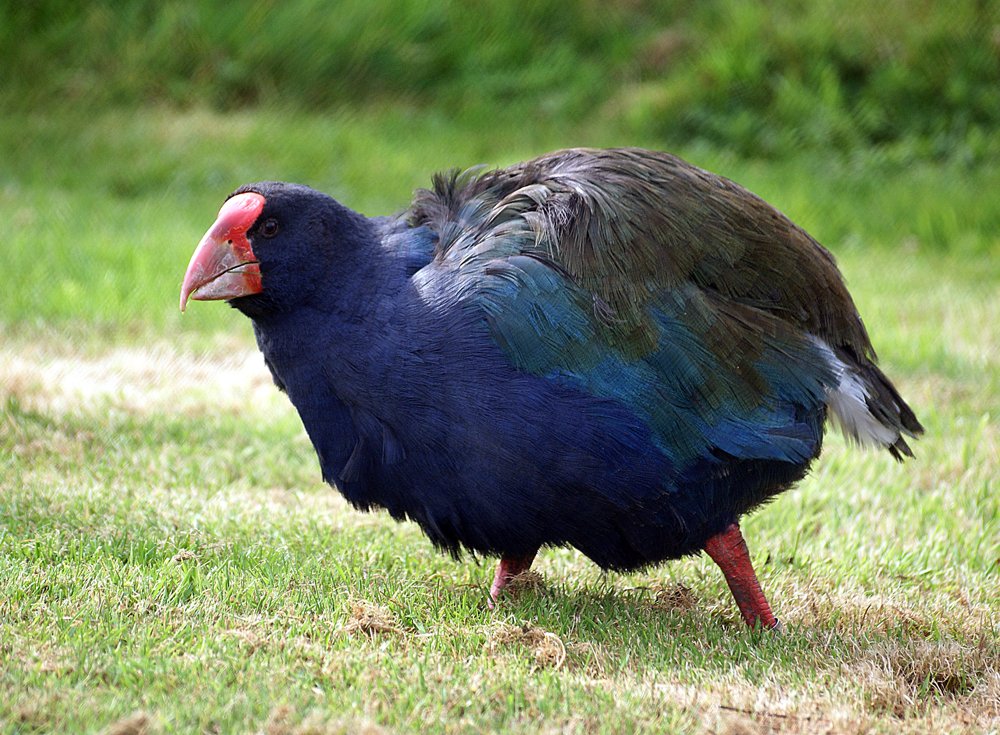


My favourite is the takahē. It looks like a big, round, blue-green hen, but it is actually a rail, the largest living member of that family. Up in the alpine grasslands, it does the job sheep or goats would do anywhere else. It grazes on tussock grass, holding a stalk in one foot and nibbling the soft base. It is also a comeback story. The takahē was thought to be extinct after 1898, until a doctor named Geoffrey Orbell rediscovered it in the mountains in 1948. Today there are about 500, and the number is growing.
The kiwi is so mammal-like that some biologists call it an honorary mammal. Its feathers feel like fur, its bones are heavy and filled with marrow, its body temperature is closer to a mammal’s than a bird’s, and it sleeps in burrows. It is the only bird in the world with nostrils at the tip of its beak, which it uses to sniff out worms in the soil at night.
The giants
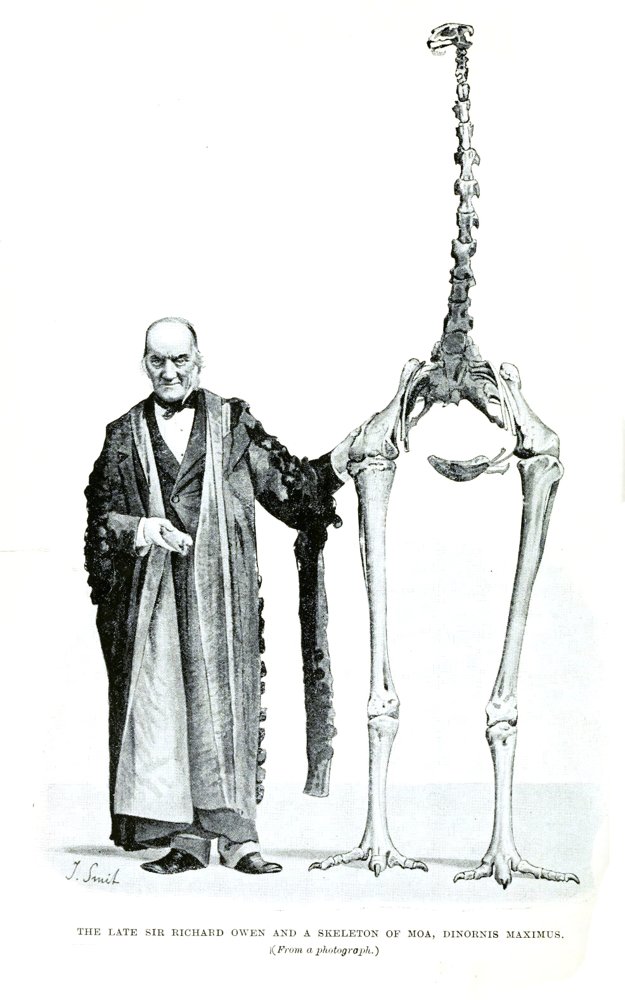
The most extreme example of birds filling the gap was the moa. There were around nine species, and the largest, the giant moa, could reach 3.6 metres tall with its neck stretched up and weigh around 230 kilograms. Moa were browsers, eating twigs and leaves from trees and shrubs, the job that deer or antelope would do elsewhere. They were also the only birds known to have had no wings at all, not even tiny leftover ones. Strangely, their closest living relatives are the tinamous of South America, which are small and can fly.
Even the top predator was a bird. Haast’s eagle, the largest eagle known, hunted moa, and depended on them so completely that when the moa disappeared, so did it.
How do reptiles survive the cold?
New Zealand has dozens of species of geckos and skinks, plus the tuatara, and they have found clever ways around the cold.
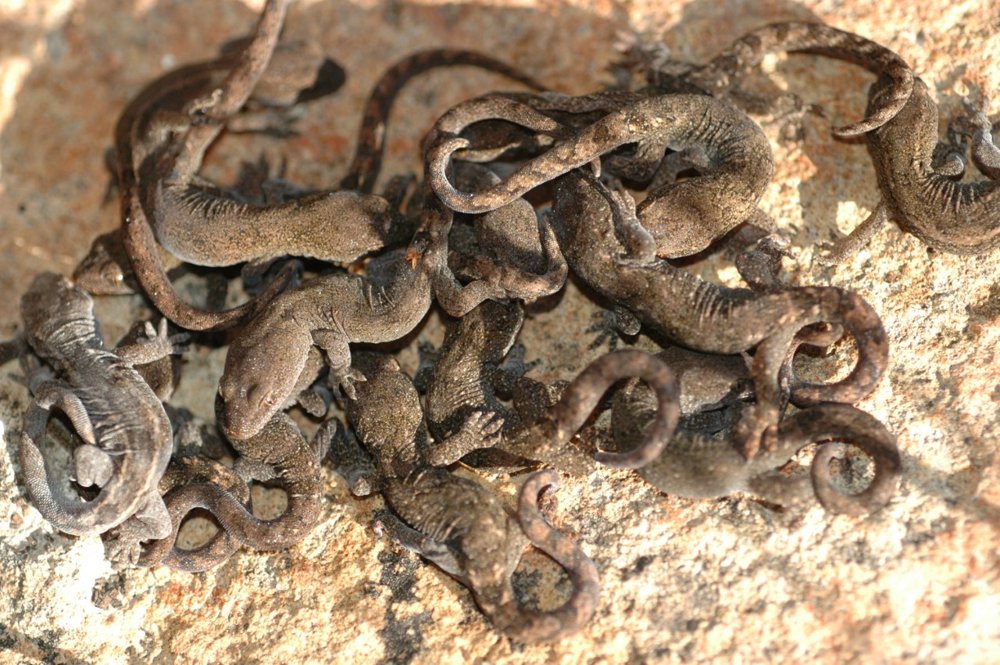
Almost every gecko in the world lays eggs. New Zealand’s geckos are the exception. All of them give birth to live young, something only one other gecko species in the world does. Carrying the babies inside lets the mother keep them warm by basking, instead of leaving eggs in cold ground. In one species, a pregnancy lasts 14 months, probably because the cold slows the babies’ development. Some New Zealand geckos have been recorded active at a body temperature of just 1.4°C, a record low for any lizard.

Then there is the tuatara. It looks like a lizard, but it is the last surviving member of a group of reptiles that goes back about 240 million years, older than the dinosaurs. It stays active at temperatures as low as 5°C and is most comfortable at 16 to 21°C, the lowest preferred body temperature of any reptile. It does everything slowly, and some live well over 100 years.
Rats, dogs and livestock
Polynesians settled New Zealand around 1300, and all the moa were gone by about 1445, probably in less than a century. The settlers also brought the Polynesian rat and dogs, and from 1769 Europeans added pigs, cats, stoats, possums, deer and more. For birds that had spent millions of years with nothing to run from, nesting on the ground and unable to fly, it was a disaster. Many of New Zealand’s surviving native animals, including the tuatara and the takahē, now live mainly on predator-free islands and in fenced sanctuaries.