Do Not Disturb
North Sentinel is the most secluded island in the world today, and it sits just 50 kilometres from an Indian city.
I watched Last Days this week, Justin Lin’s film about John Allen Chau, the 26-year-old American missionary who paid fishermen to take him to North Sentinel Island in November 2018. He paddled to the shore in a kayak with a football, some fish and a Bible, and the islanders killed him with arrows. I walked out of the cinema with a much simpler question than the film was asking. How is there still an island in 2026 that nobody has ever properly contacted? And why has not a single person, as far as anyone knows, ever left it?
This post is about North Sentinel, the most secluded island in the world today and home to one of the last uncontacted peoples on Earth.
Fifty kilometres from a city
The strangest thing about North Sentinel is not how remote it is, but how close. It is part of the Andaman Islands in the Bay of Bengal, which belong to India, and it sits just 50 kilometres west of Port Blair, the capital, a city with an airport, hotels and scuba diving shops. Planes flying over the Andamans pass close enough to see it, which is how this photo was taken, through an aeroplane window.
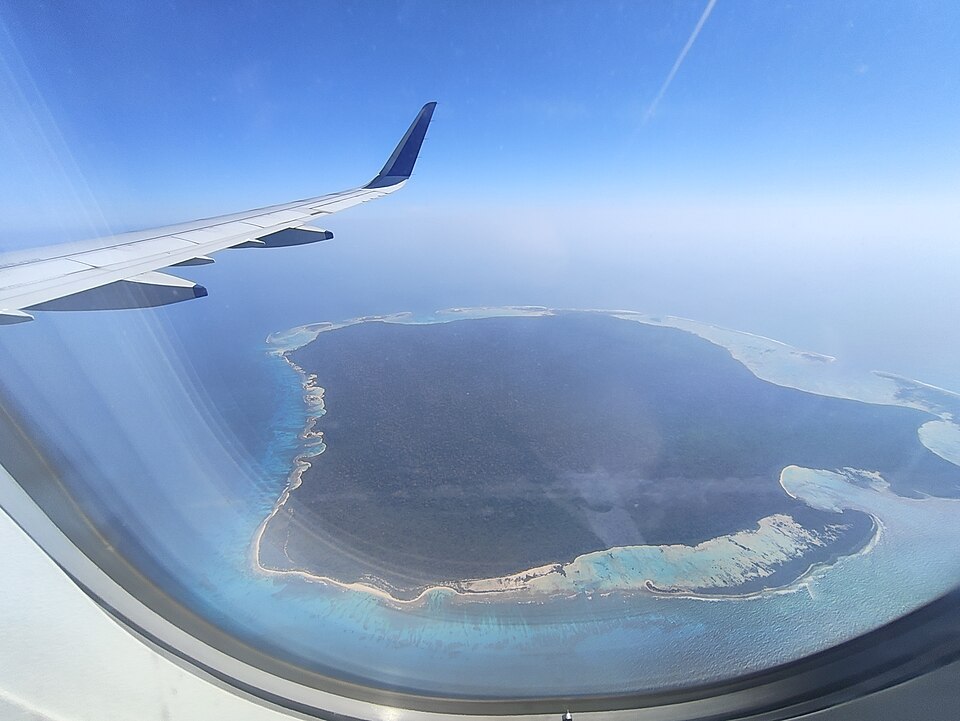

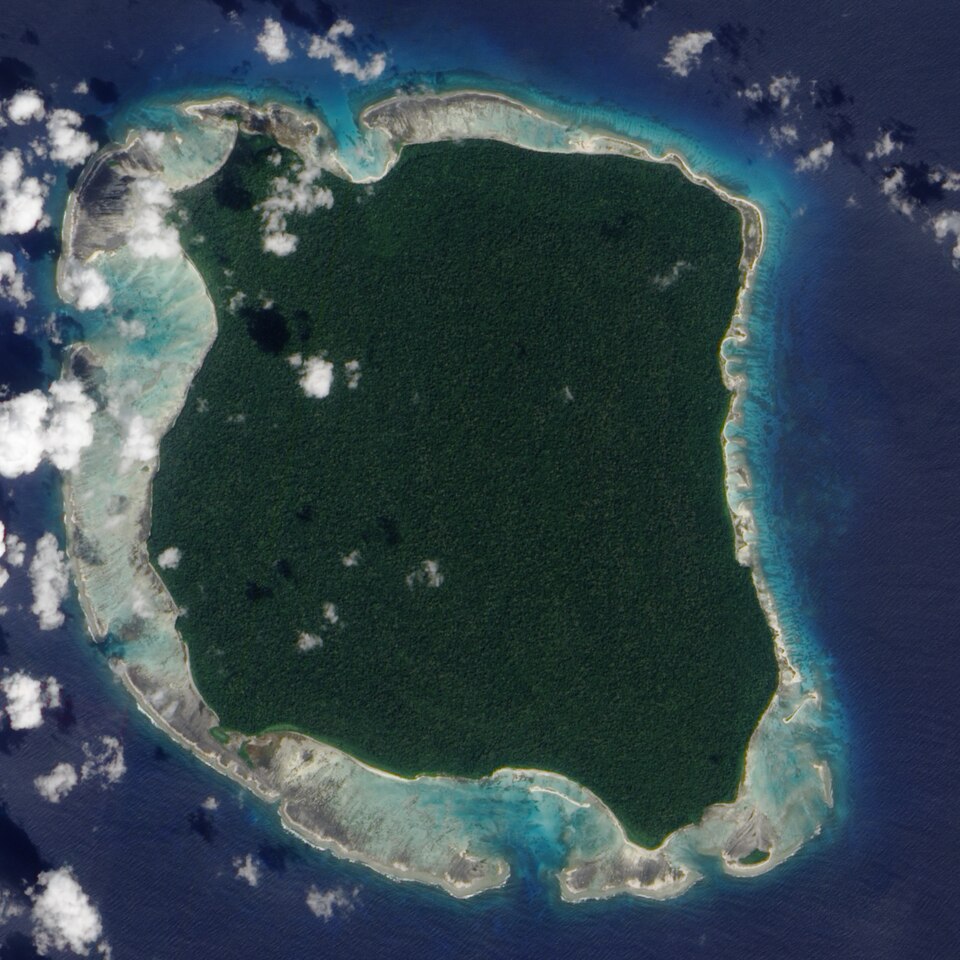

The island itself is about 60 square kilometres, almost exactly the size of Manhattan, and covered in forest right down to a thin white beach. What protects it is the sea around it. A coral reef extends up to 1.5 kilometres from the shore, there are no natural harbours, and the reef has wrecked at least two cargo ships. When the MV Primrose ran aground there in 1981, the crew watched men with spears and arrows building boats on the beach and radioed for guns. A storm kept the islanders away, and a helicopter rescued the crew a week later.
Nobody knows how many Sentinelese there are. A 2012 report guessed somewhere between 50 and 400. India’s 2011 census put down 15, which the Times of India called a “wild guess”.
Every visit, and what it cost
The Sentinelese did not always meet outsiders with arrows, and their history explains a lot. In 1880, a British officer named Maurice Vidal Portman landed with an armed party, found abandoned villages, and took six people back to Port Blair, an elderly couple and four children. In the words of the officer in charge, they “sickened rapidly, and the old man and his wife died”, so the children were sent home with presents. Nobody knows what those children carried back with them.
That was not unusual for the Andamans. The Great Andamanese, the people of the main islands, went from an estimated 5,000 in 1858 to 460 by 1931, mostly from pneumonia, syphilis, measles and influenza brought by settlers. The 2011 census counted 44 of them. People who have lived in isolation for thousands of years have no immunity to diseases the rest of us shrug off, and even a common cold can be deadly.
After independence, Indian anthropologists tried a gentler approach, leaving coconuts, bananas and pots on the beach for decades. On 4 January 1991, it finally worked. A team led by T. N. Pandit, with the anthropologist Madhumala Chattopadhyay, watched the Sentinelese wade out into the water, unarmed, and take coconuts from their hands. It is still the only friendly meeting on record. Pandit himself has always said the Sentinelese are not hostile by nature. They are people who have decided, quite reasonably, to be left alone.
India stopped the gift visits soon after, and the encounters since have been short and tense. After the 2004 tsunami, which lifted the whole island by up to two metres, a Coast Guard helicopter flew over to check on them, and a man walked out onto the beach and aimed an arrow at it. In 2006, two fishermen poaching near the reef drifted ashore and were killed. Then came Chau in 2018. And in 2025, an American YouTuber landed on the beach, left a can of Diet Coke and a coconut, blew a whistle, filmed himself, and was arrested two days later.
Why don’t they leave?
This is the question I could not stop thinking about, and the honest answer is that nobody knows, because nobody has ever been able to ask them. What we know is what has been seen from boats and helicopters. Their canoes are narrow and are pushed along with a pole, like a punt, which only works in the shallow, calm water inside the reef. Nobody has ever seen one go beyond it, and the open sea between them and the next island is rough.
But I don’t think it is only about boats. The island seems to give them everything they need, forest to hunt in and a reef full of fish, and every time the outside world has shown up, it has brought kidnapping, disease or death. From where they stand, staying put and guarding the beach might be the most rational thing anyone in this story has done.
A language nobody has heard
Nobody outside the island knows a single word of Sentinelese for certain. Linguists think it is probably related to Jarawa, spoken by a neighbouring tribe on the main islands, but the two are reported to be mutually unintelligible, and Sentinelese has never been written down or described. It is one of the only languages on Earth that we know exists and have never heard enough of to record.
The Andamanese are also fascinating genetically. A 2016 study in Nature Genetics sequenced the genomes of the Jarawa and the Onge, a tribe of only about a hundred people living on Little Andaman, further south, and found deep lineages from the early spread of modern humans out of Africa, with no sign of recent mixing with anyone else. The Sentinelese have never been sampled, but they are almost certainly part of that same old story.
Are there other islands like this?
Not really. Survival International counts at least 196 uncontacted groups around the world, but about 95% of them live deep in the Amazon rainforest, 124 in Brazil alone. They stay hidden by moving through huge forests. The Sentinelese are the only ones doing it on a small island, in plain sight, a short boat ride from a city. Nowhere else has the sea done the job of a rainforest.
Leave them alone
India’s official policy is now to watch from a distance and never make contact. It is illegal to go within about five kilometres of the island, the navy patrols the area, and the islanders have never been charged for defending themselves. Even that has wobbled. In 2018, a few months before Chau’s trip, the government relaxed the permit rules for 29 Andaman islands, including North Sentinel, to boost tourism, and then had to walk it back.
The threat today is less about missionaries and more about development. On Great Nicobar, further south, a huge port and township project is planned on the land of the Shompen, another isolated people, and rights groups argue it could wipe them out.
The film leaves you to decide what you think about John Chau. What I kept coming back to was the people on the beach. For 150 years, they have told the world the same thing, as clearly as anyone can without a shared language. Leave us alone. The most respectful thing we can do is believe them.